
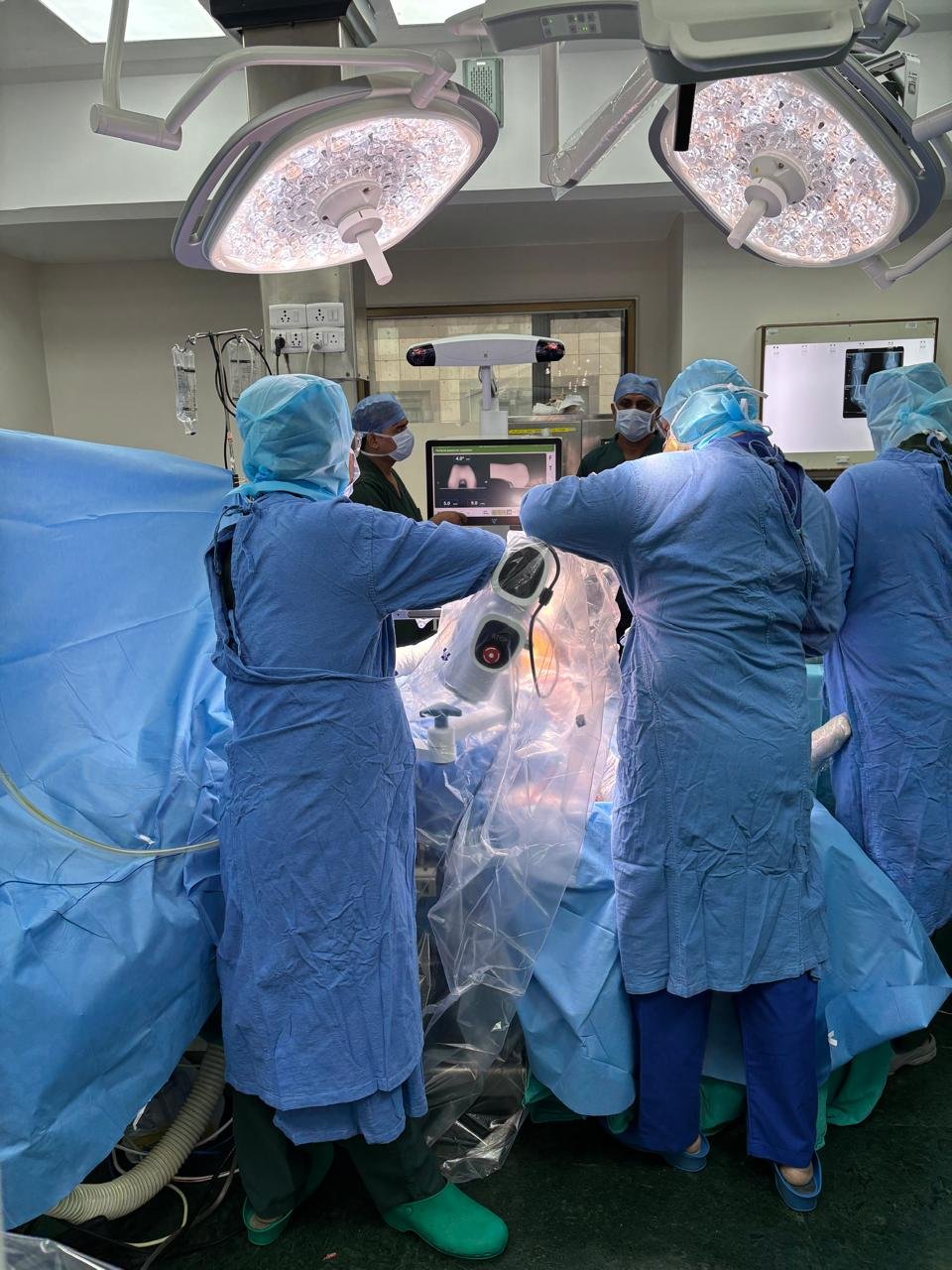
Robotic vs conventional joint replacement
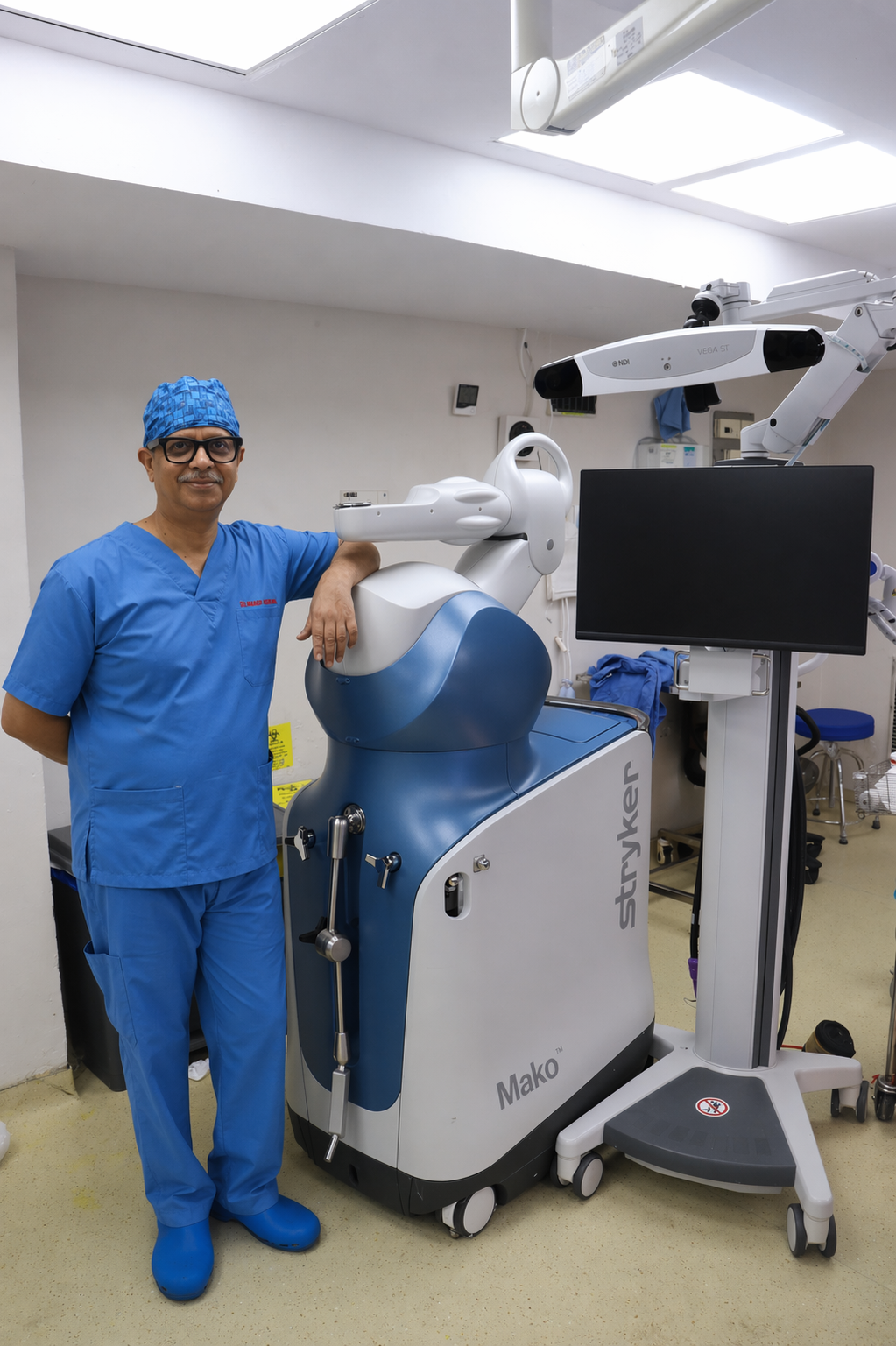
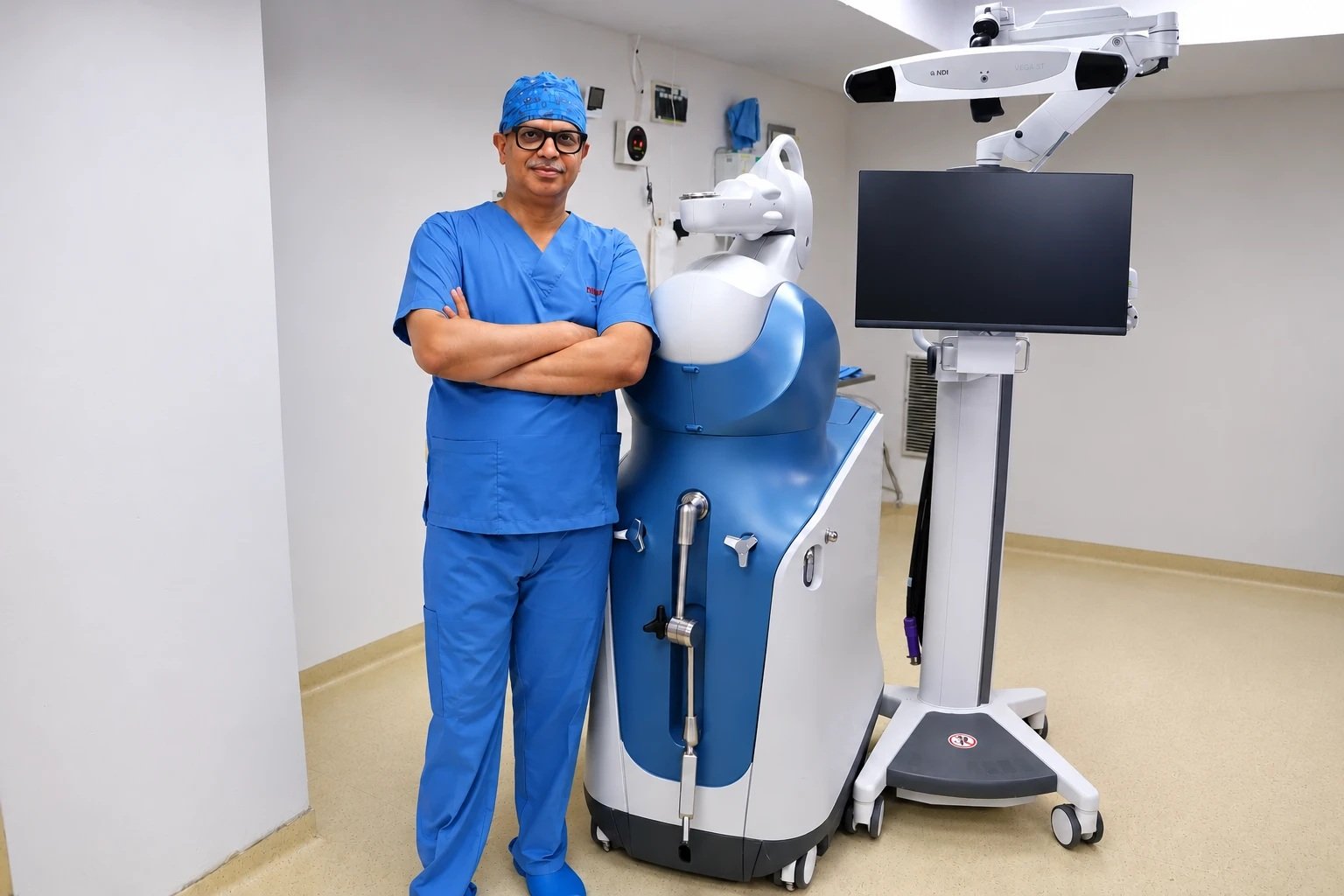
Both are joint replacement by the same surgeon with the same implants — robotic assistance changes how the plan is made and checked.
| Conventional | Robotic-assisted | |
|---|---|---|
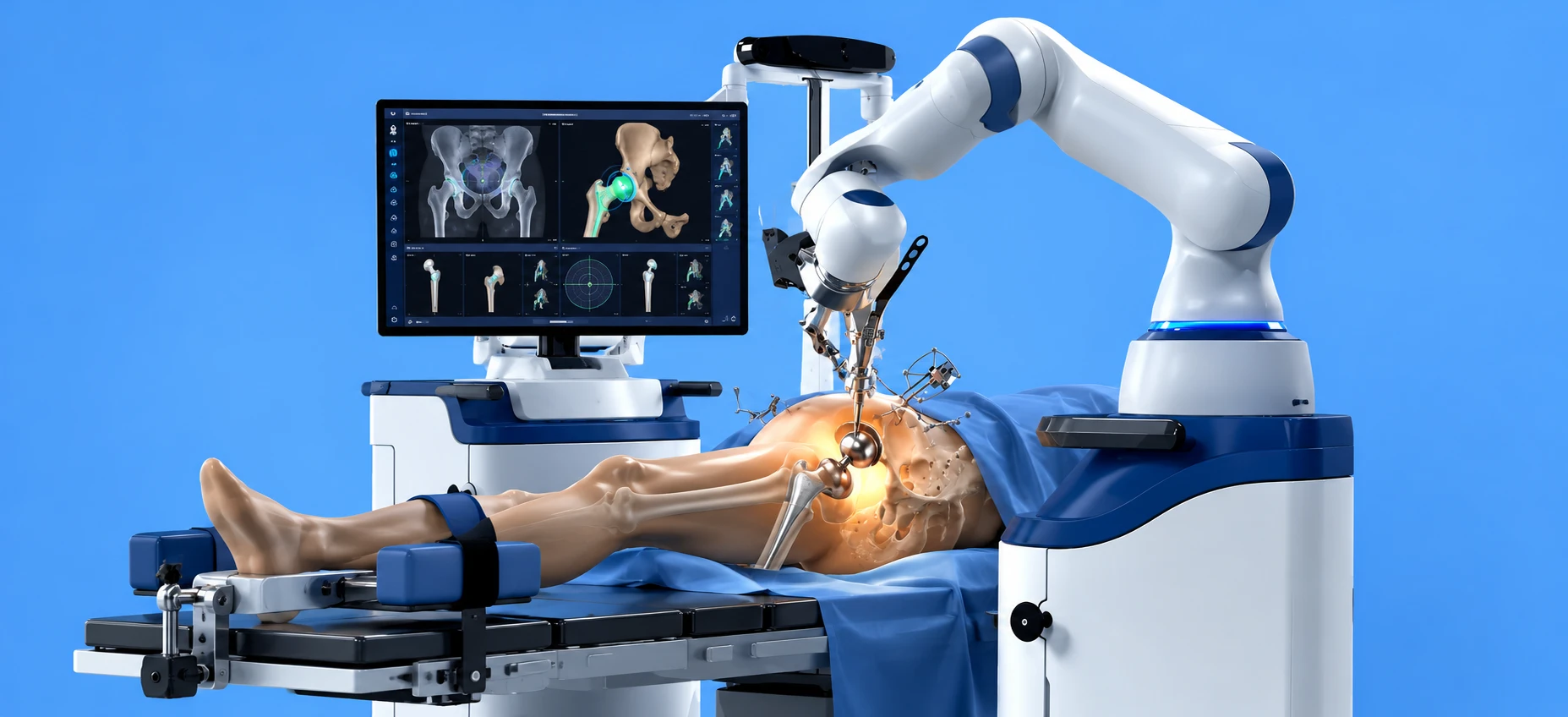
| Planning | From X-rays and standard guides | 3D model of your own joint |
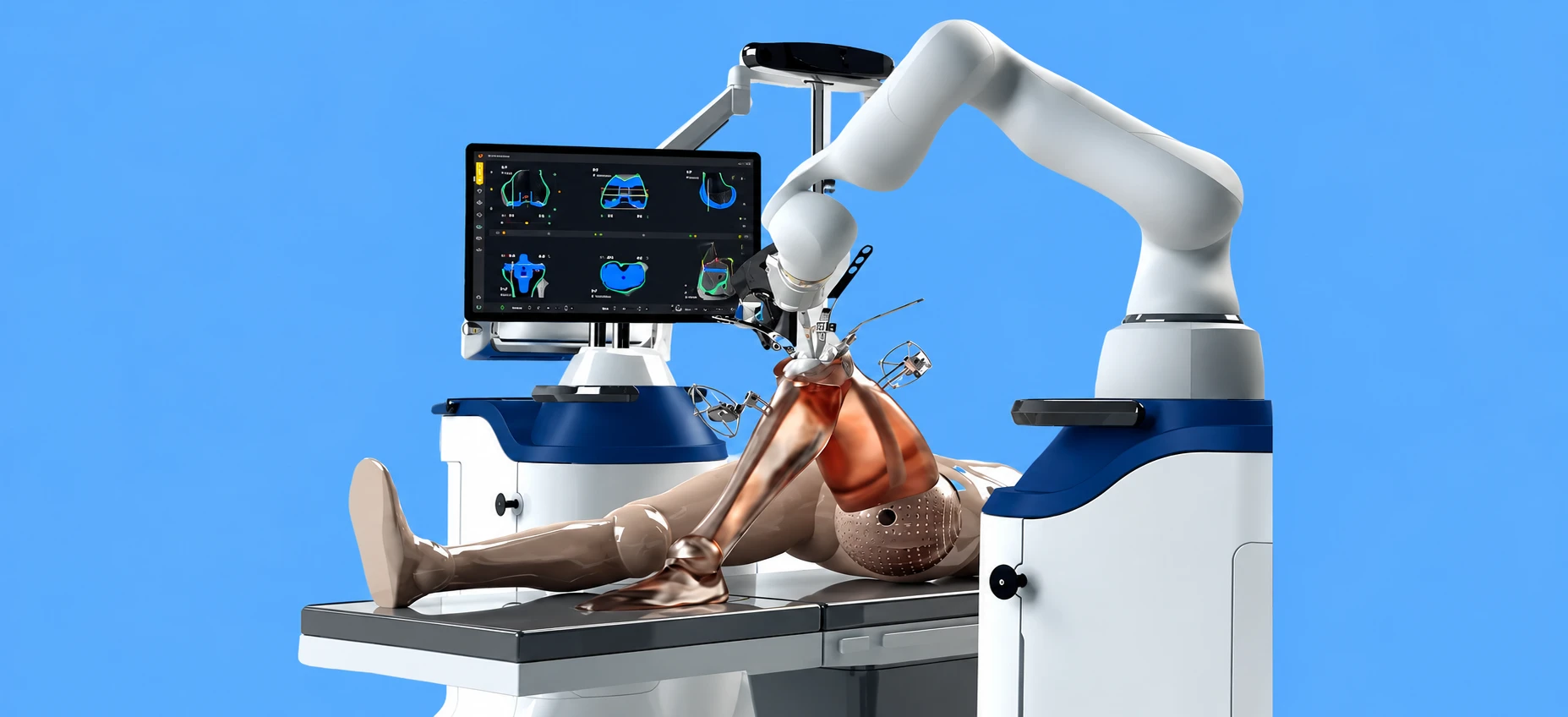
| Bone cuts | Manual cutting guides | Robotic arm keeps cuts within planned boundaries |
| Ligament balance | Assessed by feel | Measured in real time |
| Final check | Visual and by feel | Confirmed against the plan with live data |
| Surgeon's role | Performs the surgery | Performs the surgery — the robot assists |
| Cost | Lower | Somewhat higher |
Who is suitable for robotic joint replacement?
Most people who need a knee or hip replacement for arthritis — your surgeon confirms suitability after examination and X-rays.
You may be a candidate if you have:
- Constant hip or knee pain, even at rest
- Difficulty walking, climbing stairs or sitting cross-legged
- Advanced osteoarthritis or rheumatoid arthritis
- Joint deformity (bow legs or knock knees) or stiffness
- Pain that no longer responds to medicines, physiotherapy or injections
Points to know
Robotic assistance is a tool — the surgeon's experience and your rehabilitation still matter most.
- The robot does not operate by itself; the surgeon performs the surgery.
- It costs somewhat more than conventional surgery.
- Not every patient needs it — conventional surgery also gives good results.
- Long-term differences in implant life are still being studied.
- Physiotherapy after surgery remains essential for a good outcome.
Recovery after robotic joint replacement
Most patients walk with support within a day and return to most daily activities in 4–6 weeks.
Surgery usually takes 60–90 minutes per joint.
Stand and walk a few steps with support.
Walk with a walker and go home.
Manage stairs and light daily routine.
Drive, walk longer distances, return to desk work.
Return to travel and most activities, as advised.
Robotic joint replacement cost in Delhi
About ₹2.75 – ₹3.5 lakh per joint, depending on the implant, hospital and complexity — usually covered by insurance.
| Procedure | Estimated cost |
|---|---|
| Robotic Knee Replacement (single) | ₹2.75 – ₹3.5 lakh |
| Robotic Knee Replacement (bilateral) | ₹5.5 – ₹7.0 lakh |
| Robotic Hip Replacement | ₹2.75 – ₹3.5 lakh |